Influencer marketing · 6 min read
Nano, micro, mid-tier or macro: picking the right creators
"Should we go with one big influencer or many small ones?" is the first question most brands ask. The honest answer: it depends on what you want the campaign to do. Each creator tier does a different job.
The four tiers at a glance
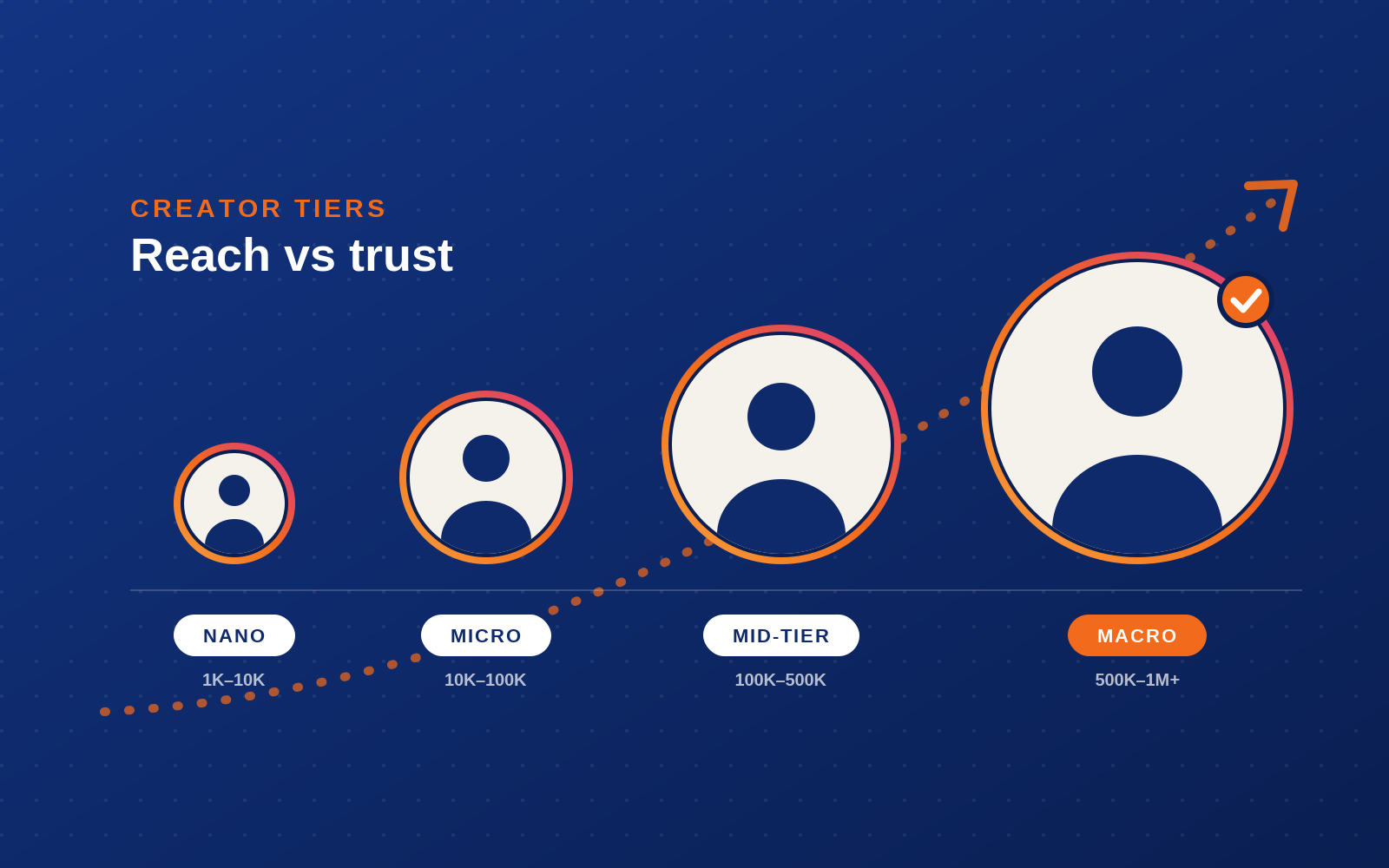
| Tier | Followers | Best at | Use it for |
|---|
| Nano | 1K–10K | Close, loyal audience. Feels like a friend's recommendation. | Local launches, word of mouth, lots of UGC at low cost |
| Micro | 10K–100K | Niche trust. Followers ask questions and act on advice. | Consideration, app installs, product reviews |
| Mid-tier | 100K–500K | Good reach while still feeling personal. | Scaling a message that already works |
| Macro | 500K–1M+ | Big reach in a short window. | Launch days, sales, brand awareness |
Start from the goal, not the follower count
- Awareness (launch, sale, new brand): lead with a few macro or mid-tier creators so lots of people hear about it in the same week.
- Trust and consideration: use many micro creators. People believe a reviewer who talks to their niche every day.
- Installs, sign-ups, sales: combine micro and nano creators with trackable links or codes, then push the best videos with ads.
- Content for ads: nano creators are a fast way to get many real-looking videos you can test.
Why most campaigns mix tiers
When people see your product from several different creators in a few days, it starts to feel popular, not paid. A mixed campaign gives you:
- Repetition from different voices. The same product shows up again and again in the feed.
- Coverage. Different niches, cities and languages at once (Hindi, Marathi, English and more).
- A content library. Dozens of videos you can reuse in Meta and Google ads.
This is why our campaigns usually run with 100+ creators at the same time.
A checklist before you pick a creator
- Does their audience match your buyer (age, city, language, interest)?
- Are comments real conversations, or just emojis?
- Are views steady across recent reels, not just one viral video?
- Have they promoted a direct competitor recently?
- Does their style suit your product? A tech explainer and a comedy creator sell differently.
Short version: macro for reach, micro for trust, nano for volume. Pick the mix from your goal, then put ad spend behind the videos that perform.
UGC · 5 min read
UGC videos: what works, where to use them, how to brief
UGC (user-generated content) is video that looks like a real customer made it on their phone, not a studio. It blends into the feed, so people watch it instead of skipping it as an ad.
UGC vs influencer posts: what's the difference?
An influencer post goes out on the creator's own page, to their followers. A UGC video is made for your brand. You own it and use it wherever you want: your ads, your page, your website. Many brands do both: influencers for reach, UGC creators for ad content.
Formats that work
| Format | What it looks like | Good for |
|---|
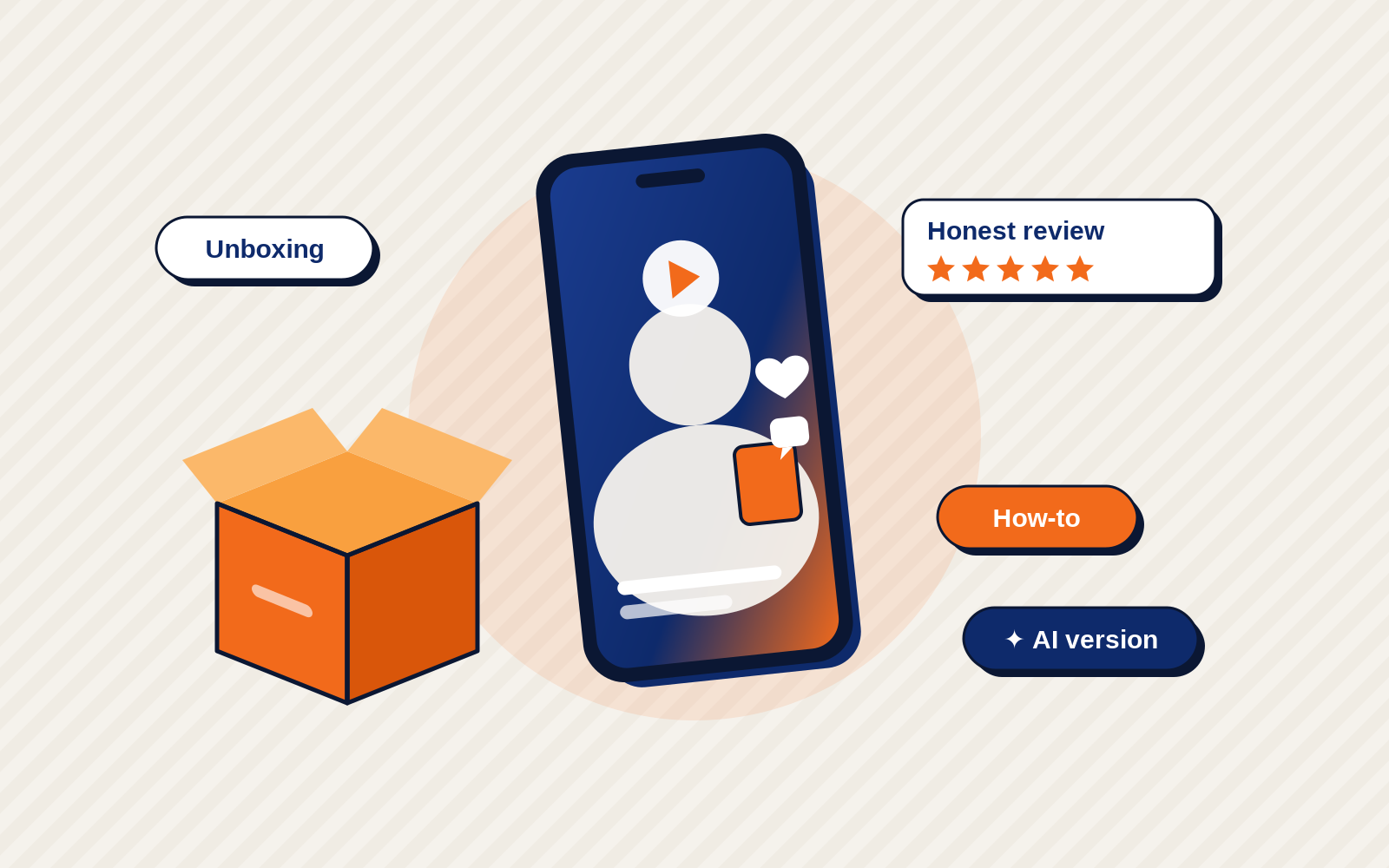
| Unboxing | First look and reaction, straight out of the box | Gadgets, new launches |
| Problem → solution | "I had this problem, this fixed it" | Apps, utilities, D2C products |
| Honest review | Pros, small cons, final verdict | Building trust before purchase |
| How-to / tutorial | Screen or hands-on demo of one feature | Apps, tech, features that need explaining |
| Comparison | Before vs after, or vs the old way | Showing the result quickly |
Where to use UGC
- Meta and Google ads: the biggest use. Test several hooks and keep the winners.
- Your Instagram and YouTube Shorts: fills your page with real-looking content.
- Website and product pages: a short review video near the "Buy" button builds confidence.
- Marketplace listings: video on Flipkart or Amazon pages, where allowed.
Where AI UGC fits
AI videos are useful when you need many versions quickly: different hooks, languages or offers for testing. They work best alongside real creator videos, not instead of them. Use real people for trust, and AI variations for speed and scale.
A simple UGC brief
- One goal: install, buy, or remember the name. Pick one.
- Who it's for: who should feel "this is for me".
- Must-say points: 2–3 max, not a full feature list.
- Hook ideas: the first line the viewer hears.
- Do's and don'ts: claims to avoid, competitor names, brand words.
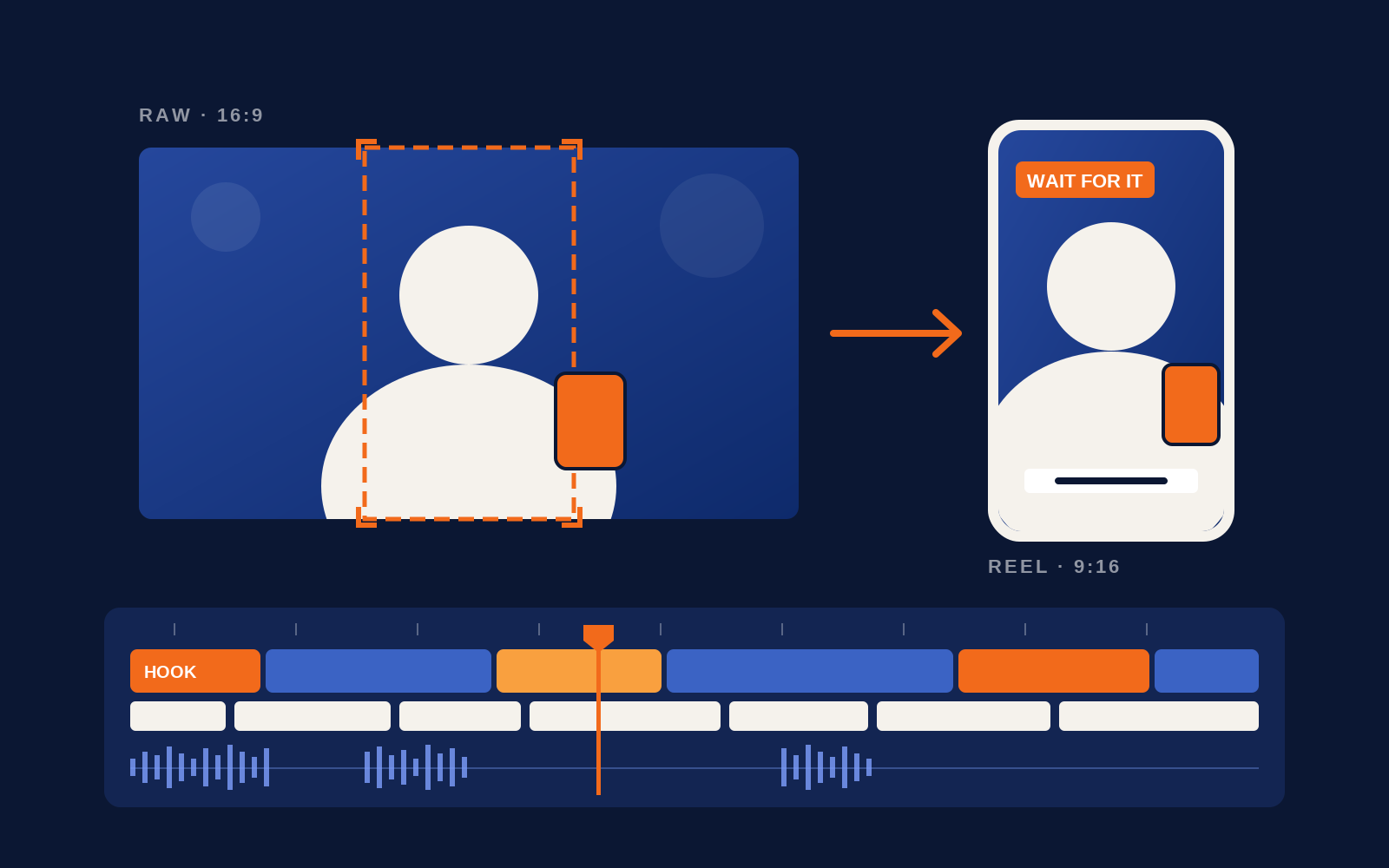
- Delivery: 9:16 vertical, length, raw files or edited, captions or not.
Short version: UGC works because it doesn't look like an ad. Make many versions, test them in ads, and scale the ones people actually watch.
Video editing · 5 min read
Why brands hand their video editing to a team
Two brands can shoot the same footage and get very different results. The difference is usually the edit: how fast it hooks, how easy it is to follow, and whether it ends with a clear next step.
What good short-form editing does
- Hook in the first 1–2 seconds. Start with the most interesting moment, not the intro.
- Captions on screen. Many people watch with sound off.
- Tight pacing. Cut pauses and repeats so there's no reason to scroll away.
- Zooms, B-roll and text pop-ups that explain, not just decorate.
- Clean sound. Level voice, background music that doesn't fight it.
- A clear ending. What should the viewer do now?
Why outsourcing often makes sense
| Doing it in-house | Working with an editing team |
|---|
| Volume | One person, limited videos per week | Several editors, so more videos when you need them |
| Skills | Depends on one person's style | Different editors for reels, YouTube, ads and motion graphics |
| Cost | Salary, software, hardware, all year | Pay for the work you need |
| Ad versions | Hard to make many cuts quickly | Multiple hooks, lengths and sizes from one shoot |
One shoot, many videos
A good editor can turn one recording into several pieces: a 30-second reel, a 15-second ad, a vertical and a square version, and a few different opening hooks for testing. That's how you get more out of every shoot.
How we help with editing
- Edit your videos: send raw footage, get back finished reels, shorts, YouTube videos and ads.
- Provide editors: work with our editors on your own projects.
- Turnaround: [PLACEHOLDER: usual delivery time, e.g. 24–48 hours per reel]
- Revisions: [PLACEHOLDER: how many revision rounds are included]
Short version: the edit decides whether people keep watching. If you post or run ads often, a dedicated editing team saves time and gives you more versions to test.
Want to see our editing work? View samples → or plan a project →